On the morning of April 9, a reporter from the WCICO arrived at Songbai Village, Beiping Town, Chengkou County. A Frenchman lives here. The villagers call him “Teacher Wen,” while he calls himself “Vincent Qi” — “Qi” , the Chinese surname he chose for himself, meaning lacquer.
Vincent, 48, comes from Toulouse, France, where his ancestors were farmers. He first visited China with his grandmother more than 20 years ago. After the 2008 Wenchuan earthquake, he went to Chengdu as a volunteer. Later, he moved between Huangjueping and Gele Mountain in Chongqing, eventually settling down in the Daba Mountains of Chengkou, where he has lived for five years.
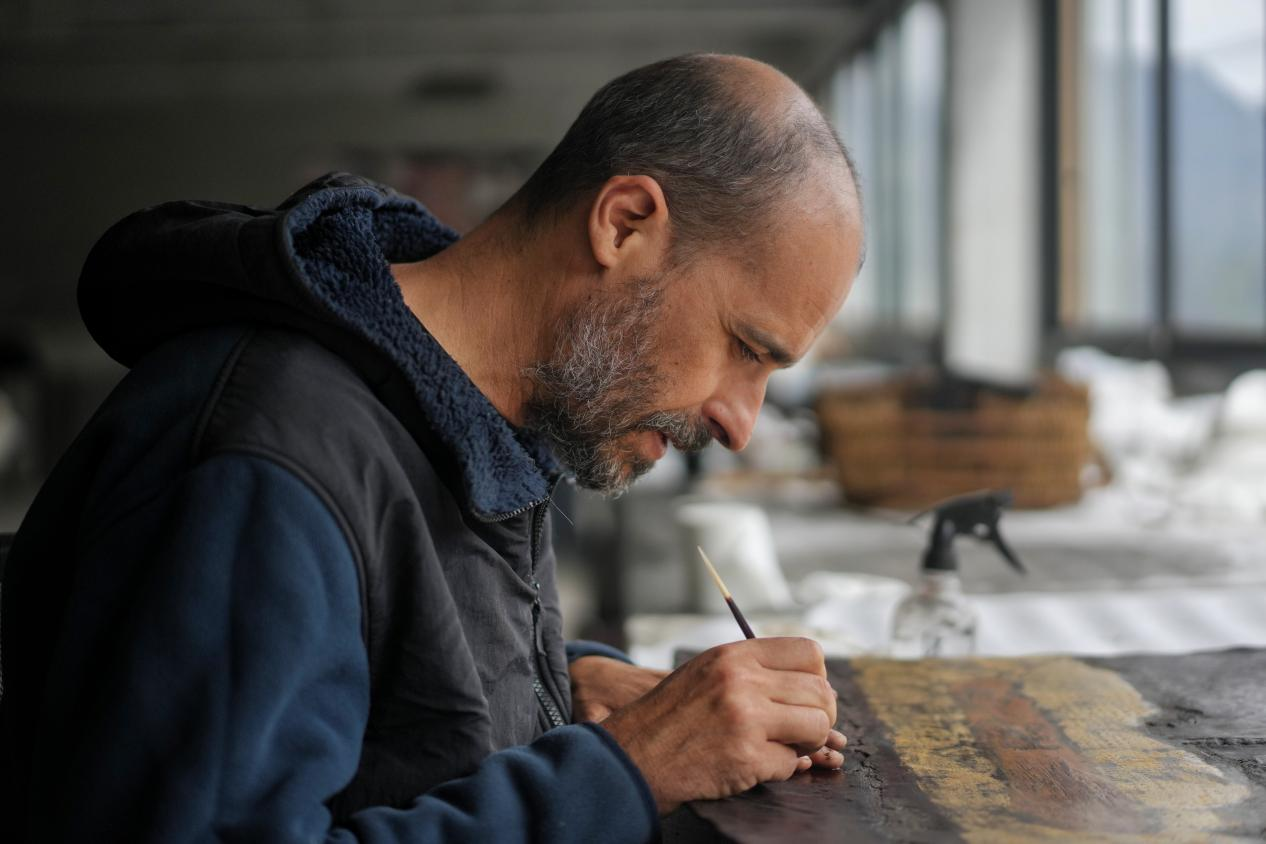
Vincent is performing restoration work on a piece. Photo by Luo Jia
Why Chengkou? Vincent’s answer is simple: “This place has the best lacquer trees and the most beautiful scenery.”
The day the reporter visited, the weather was perfect. On the mountainside, a sea of clouds rolled and surged under the sunlight, while the steep Daba Mountains stood tall and majestic, layer upon layer stretching to the horizon. Such breathtaking landscapes have attracted more than just Vincent. At that moment, a British female artist and a Mexican art university student were also at his residence, creating and studying.
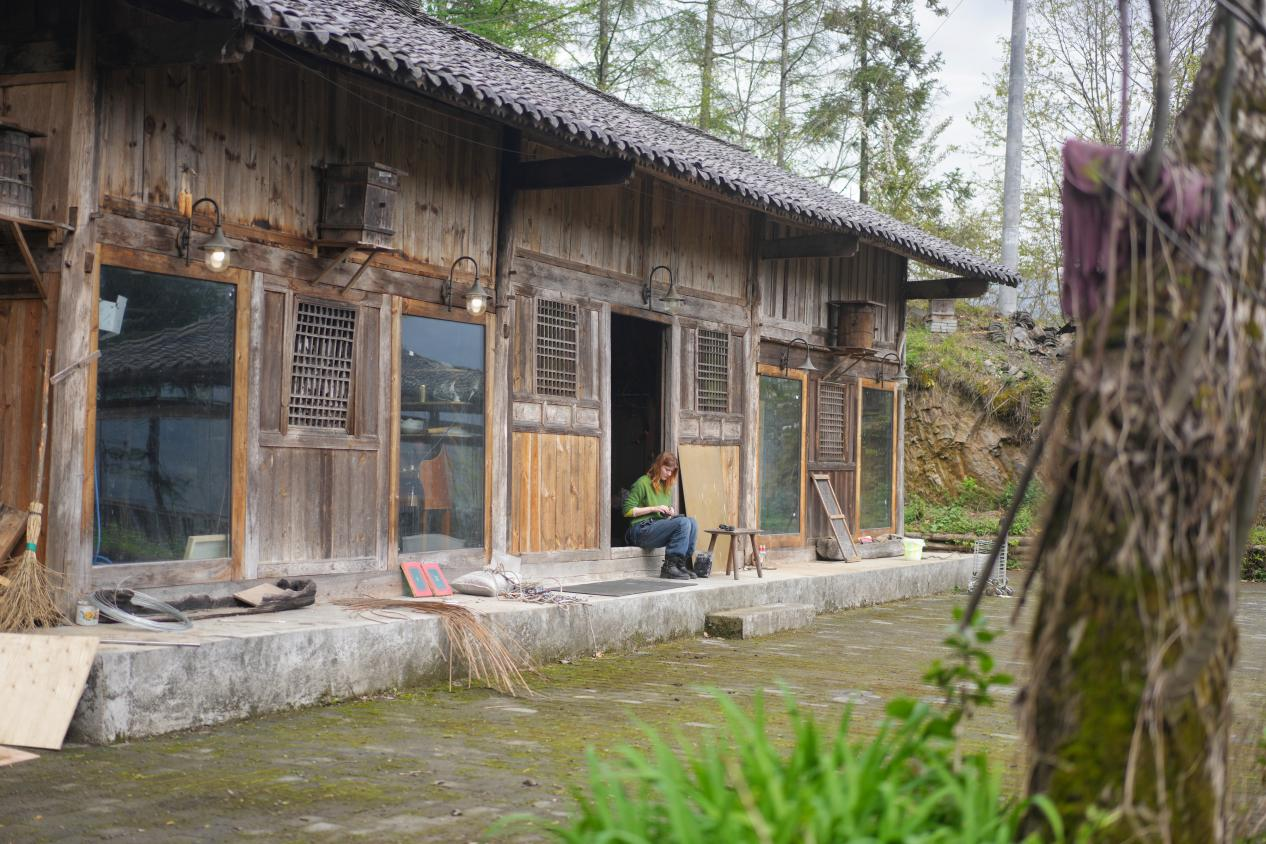
A British artist is creating art in Vincent’s yard. Photo by Luo Jia
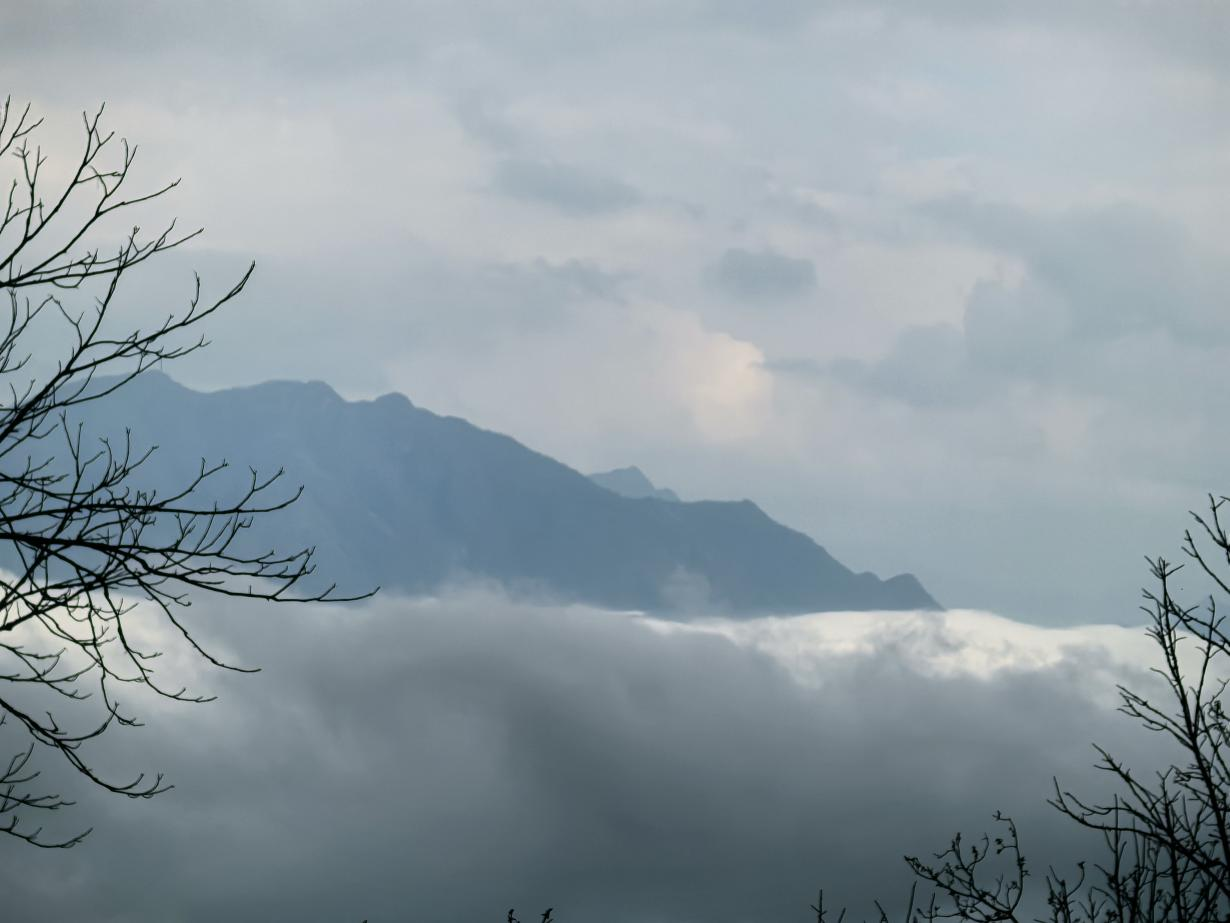
The beautiful view in front of Vincent’s small courtyard. Photo by Luo Jia
China is the world’s largest producer of raw lacquer, and Chengkou is known as the “Hometown of Chinese Raw Lacquer.” Vincent’s fascination with lacquer began in university when he saw artists using lacquer as their medium. “Steel and stone feel cold, but lacquer is warm. When you touch it, it feels like touching skin.”
For this craft, he officially came to China in 2007 to learn the art. Since France has no raw lacquer, he immersed himself in the lacquer forests of Sichuan, Hubei, and Chongqing. Every July, he joins local lacquer farmers in the mountains to tap lacquer. As the saying goes, “A thousand cuts over a hundred miles yield one jin of lacquer.” Raw lacquer is extremely precious, and the allergies it causes are severe — red, swollen, and ulcerated skin is commonplace. Yet he calls it a “beautiful temptation.”
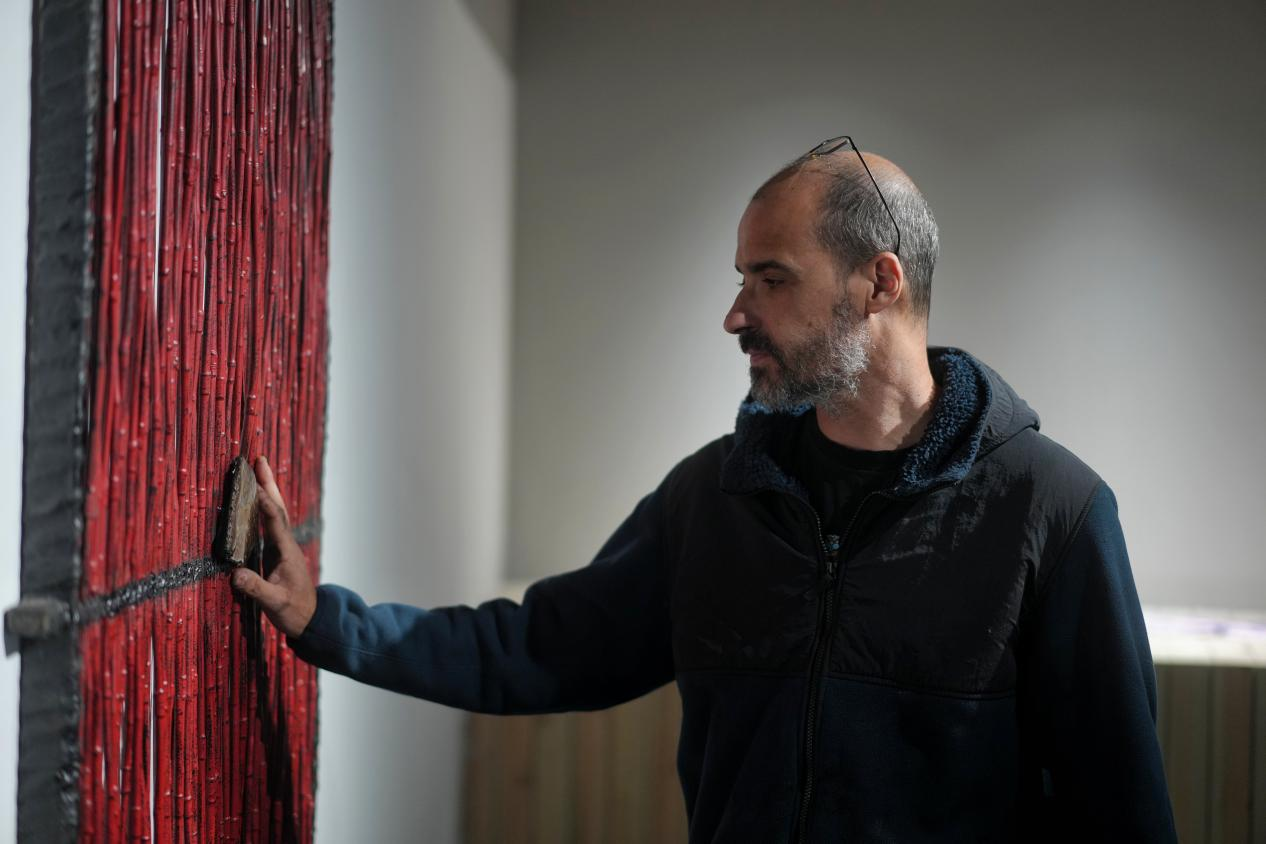
Vincent is checking his own work. Photo by Luo Jia
In Songbai Village, Vincent has become a true local farmer. He wears liberation shoes and old clothes stained with lacquer, opening his door at sunrise and closing it at sunset. He keeps five or six beehives, and the bees buzz busily in and out, thriving under his care. In the yard, he raises free-range black-skinned chickens and French turkeys. He grows green onions, ginger, and garlic, as well as thyme and rosemary to pair with French steak — making him even more of a local farmer than many natives. He has also picked up quite a bit of the Chengkou dialect, casually dropping phrases like “yaode” (okay) and “xiaode” (I know) in conversation, often drawing chuckles from the reporter.
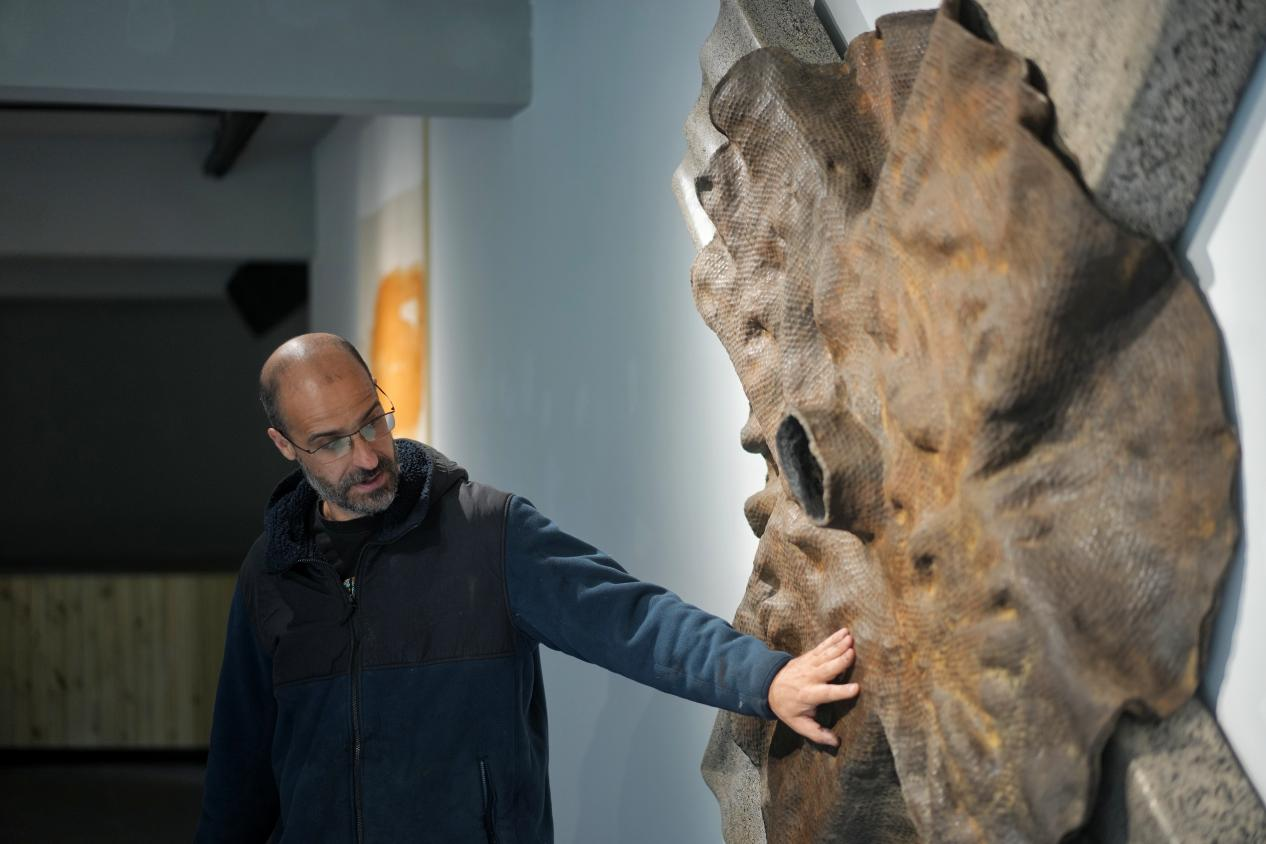
Vincent is showing his work to the reporter. Photo by Luo Jia
His studio is an old, idle village house. There is no modern equipment inside — only an old record player and tools in his hands. He creates using bamboo, rice sacks, discarded pile-driver heads, and even the common village wooden scoops (cuo piao). The process involves repeatedly brushing lacquer, mounting fabric, polishing, and applying gold foil. A single piece often takes several months to complete.
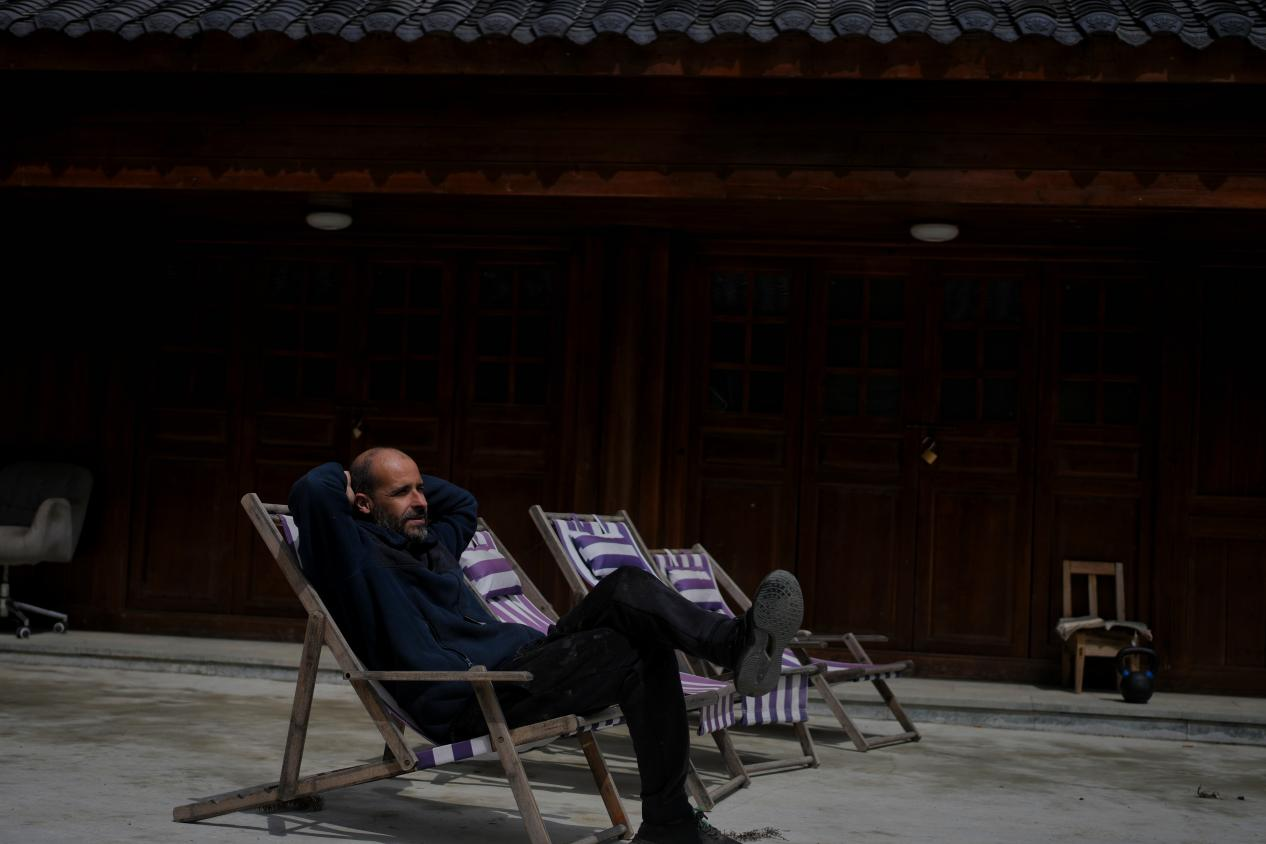
Vincent is sunbathing in the yard. Photo by Luo Jia
Vincent also teaches local villagers lacquer art. His apprentice Zheng Yongping, who used to raise bees, now earns a monthly salary of 6,000 yuan. An artistically processed spoon can sell for over 200 yuan. Every year, Vincent pays more than 200,000 yuan in labor fees to his helpers. His works are often quickly snapped up by collectors and exported to France and other countries. Next month, he will hold an exhibition in Fujian.
His wife, Xiao Rong, is from Mianyang, Sichuan. The couple has a child named “Xiao Qi Qi” (Little Lacquer Seven). Xiao Rong says that due to future work needs, they plan to set up an office in Beibei and spend part of their time in the main urban area. However, Vincent clearly cannot leave these mountains. A British female artist was at his residence that day, preparing for her own solo exhibition.
Chongqing has grown increasingly popular internationally in recent years, and Vincent has felt this change firsthand. He says that when French friends heard he had settled in Chongqing in the early years, they would ask “Why?” Now they say, “That’s so cool.”
Reporter: Yang Jinxing
Editor: Jiang Jinggu
Director: Luo Jia
重庆国际新闻中心由重庆市政府新闻办主办,西部国际传播中心运营,是集新媒体内容生产、分发、统计于一体的融媒体平台。
目前,重庆国际新闻中心已有注册海内外媒体184家,注册记者3800名,涵盖欧美、日韩、东南亚等海外媒体,人民日报、新华社、中央电视台等中央媒体,以及全国各省市重点媒体。
同时,重庆国际新闻中心还具备线上新闻发布功能,能够实现“登录一平台,面向全世界”。
联系人:罗嘉 联系电话:18623411433